Amélie Dufresne Wins the 2026 BCI Americas Continuity and Resilience Newcomer of the Year Award!
Amélie Dufresne of Premier Continuum wins the 2026 BCI Americas Continuity and Resilience Newcomer of the Year Award. Learn more in this press release.



.png)
Personal resilience is the ability to adapt, perform, and recover during pressure, uncertainty, or disruption. It is built through everyday habits such as maintaining balance, managing energy, understanding technology, protecting finances, and preparing before a crisis occurs.
Work demands, technological disruption, financial pressure, and personal responsibilities can overlap quickly. Resilience is therefore not only an organizational priority; it also depends on the people who make organizations work.
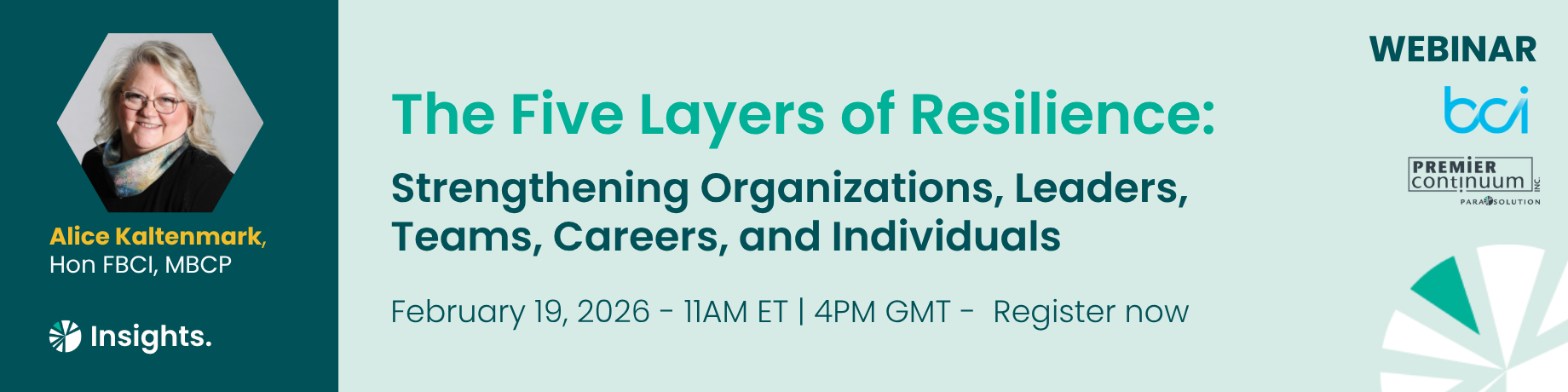
Drawing directly from Premier Continuum’s webinar on the Five Layers of Resilience, this article explains five habits that build this capacity before it is tested.
Personal resilience is the sustained capacity to adapt, perform, and recover when pressure, uncertainty, or change affects your life and work. The webinar uses the term individual resilience; in this article, both terms refer to the same concept.
It is not limited to getting through one difficult event. It is a long-term practice built through balance, energy management, technological awareness, financial preparedness, and a proactive mindset.
“Resilient individuals don’t wait for disruption to force change. They anticipate, adapt, and invest early in skills, health, preparedness, and perspective.” — Alice Kaltenmark, BCI Instructor and Global Resilience Thought Leader
Personal resilience shapes how people make decisions, communicate, and support others under pressure. Investing in your development and understanding the value of your skills builds confidence and helps you adapt to change.
When individuals develop strong personal continuity habits, they bring that mindset into the workplace. Better-prepared people make calmer decisions, communicate more effectively, and support others during disruption. In this way, personal resilience strengthens not only individuals, but also careers, teams, leaders, and organizations.
The webinar presents personal resilience as cumulative, built through small and consistent habits. It is not only about reacting well when disruption happens, but about preparing yourself physically, mentally, financially, and practically before you are tested.
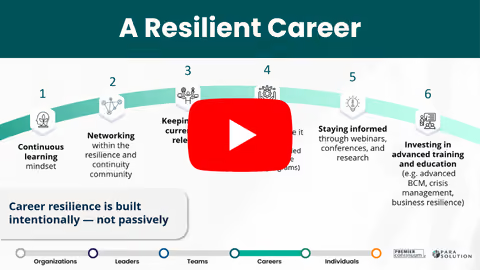
Watch Chapter 5: Individual Resilience or continue reading for the key insights!
Personal resilience starts with a healthy balance between work, home, and community.
This balance is not a luxury. It is a resilience requirement. When one area is under pressure, the others are inevitably affected too. Work stress can impact home life. Personal challenges can reduce focus at work. A lack of community support can make disruption harder to manage.
Maintaining that balance creates a more sustainable foundation for adapting and recovering over time.
Personal resilience depends on your energy.
Resilient people pay attention to their physical and mental health because sustained fatigue reduces decision-making quality, judgment, and adaptability.
Managing energy means noticing prolonged fatigue early and protecting the capacity you need to think clearly, adjust, and recover under pressure.
Technology can support personal resilience, but depending on it too much can create vulnerability.
Resilient individuals understand the tools they use, recognize their limits, and know what to do when those tools fail. Cloud services, SaaS platforms, and automated workflows may become unavailable during disruption.
Staying current helps you adapt; maintaining a non-digital backup helps you continue functioning.
Financial resilience is part of personal resilience. Protecting personal and family finances reduces stress and helps preserve decision-making during disruption.
Financial insecurity can amplify the effects of a crisis both professionally and personally. Planning ahead creates more room to respond deliberately rather than react under pressure.
A resilient person takes an active rather than reactive posture: look ahead, lay the groundwork early, and avoid last-minute scrambling whenever possible.
At home, that can mean backup power, battery packs, alternative communication methods, and a basic emergency kit. These are not extreme measures; they are practical ways to apply continuity principles in everyday life.
One practical way to strengthen personal resilience is to adopt a 72-hour mindset.
The webinar suggests a simple question: could you and your household operate for a few days without immediate external support? Knowing that you have a workable plan reduces cognitive load and builds confidence during a wider disruption.
This aligns with Government of Canada emergency preparedness guidance, which recommends being ready to be self-sufficient for at least 72 hours. The goal is not to anticipate every scenario, but to create enough stability to stay functional and make clearer decisions.
It grows through small actions repeated over time: maintaining balance, managing energy, understanding technology, protecting personal finances, and preparing before disruption happens.
That preparation creates confidence and agency. People who feel prepared are more willing to take responsibility, support others, and lead regardless of their formal title.
Explore the other layers through Premier Continuum’s articles on career resilience, team resilience, leadership resilience, and organizational resilience.
Watch the full webinar to learn more about the different layers of resilience: