ParaSolution Recognized as a High Performer on G2 for Business Continuity Management Software
ParaSolution is recognized as a High Performer on G2 for Business Continuity Management Software. Learn more on ParaSolution's performances on G2.



.png)
Many organizations believe they are resilient because they went through events like COVID and did not go down. Yet when disruptions occur, decision-making slows down, dependencies become visible for the first time, and teams struggle to coordinate their response.
As Alice Kaltenmark, Global Resilience Thought Leader with over 40 years of experience and BCI Instructor at Premier Continuum, highlighted during the Insights webinar on the Five Layers of Resilience, organizational resilience is better understood as a set of capabilities that allow an organization to anticipate, prepare for, respond to, and learn from disruptions.
This perspective, inspired by the work of Duchek (2020), shifts the focus from documentation to organizational capability. Her research shows that organizational resilience is not a single trait, but a set of interconnected capabilities that unfold over time.
Assessing resilience therefore means examining whether these capabilities exist within the organization.
Or continue reading to explore the key insights from her presentation!

Resilient organizations are able to detect weak signals and emerging threats before disruptions occur.
This includes monitoring changes in technology, geopolitics, supply chains, or climate conditions that could affect operations.
Practical indicators include:
While teams can monitor emerging risks through traditional processes, modern approaches increasingly leverage technology and artificial intelligence to detect weak signals and evolving threats more effectively.
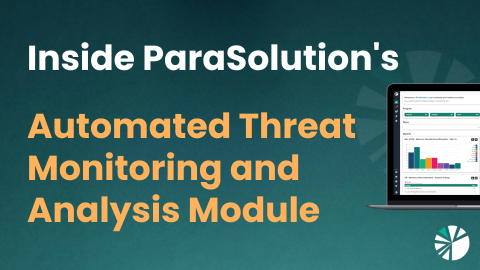
At Premier Continuum, we support this capability through the Automated Threat Monitoring and Analysis Module, a powerful built-in feature within our BCM software ParaSolution, designed to continuously scan external sources and help organizations anticipate potential disruptions.
Organizations that lack anticipation capabilities often find themselves reacting to events rather than preparing for them.
Preparation refers to the deployment of all the resources, structures, and plans that allow the organization to respond when disruptions occur.
Key components of a Business Continuity Management System (BCMS) include:
But how can an organization ensure it has the right system in place when disruptions occur?
The good news is that organizations do not need to start from scratch when developing their preparedness capabilities.
International standards such as ISO 22301 and professional guidance such as the Business Continuity Institute (BCI) Good Practice Guidelines (GPG) provide well-established frameworks for building business continuity and resilience programs.
You can learn more about these two complementary approaches in this blog article: ISO and BCI: Two Complementary Approaches to Business Continuity.

As Alice Kaltenmark noted during the webinar, these frameworks support organizations in structuring governance, defining responsibilities, and implementing the plans, training, and exercises required to respond effectively to disruptions.
While standards are often perceived as constraints or compliance exercises, the best standards actually function as living frameworks. They provide organizations with structure and a shared language while still allowing them to adapt to their specific context.
Standards therefore offer a framework within which organizations can operate and continuously adjust their resilience practices.
During a disruption, resilient organizations are able to maintain critical functions and stabilize operations.
This capability is often revealed during crisis response, when organizations must coordinate teams, manage communications, and sustain essential services.
Indicators include:
This phase demonstrates whether the organization’s preparation translates into operational capability.
“During disruption, resilience becomes operational: maintaining critical functions, coordinating decisions, and acting under pressure.”
— Alice Kaltenmark
Resilience also requires organizations to adapt their practices following a disruption.
This may involve:
As Alice Kaltenmark emphasized during the webinar, resilience is not only about what an organization plans for. It is ultimately about what the organization is able to do when disruption occurs.
Organizations that lack adaptive capacity often attempt to restore the previous state without addressing the weaknesses revealed by the disruption.
As a business continuity champion, you will have to report to the C-Suite.
Senior leaders are less interested in documentation than in demonstrated capability. They want to know what the organization can execute in practice — not only what is written in plans.
In other words, resilience must be visible through operational outcomes.
You must be able to answer a simple question:
What is your actual capability?
Resilient organizations instead use disruption as an opportunity to strengthen their operations.
Finally, resilient organizations integrate experience into organizational memory.
Learning occurs through mechanisms such as:
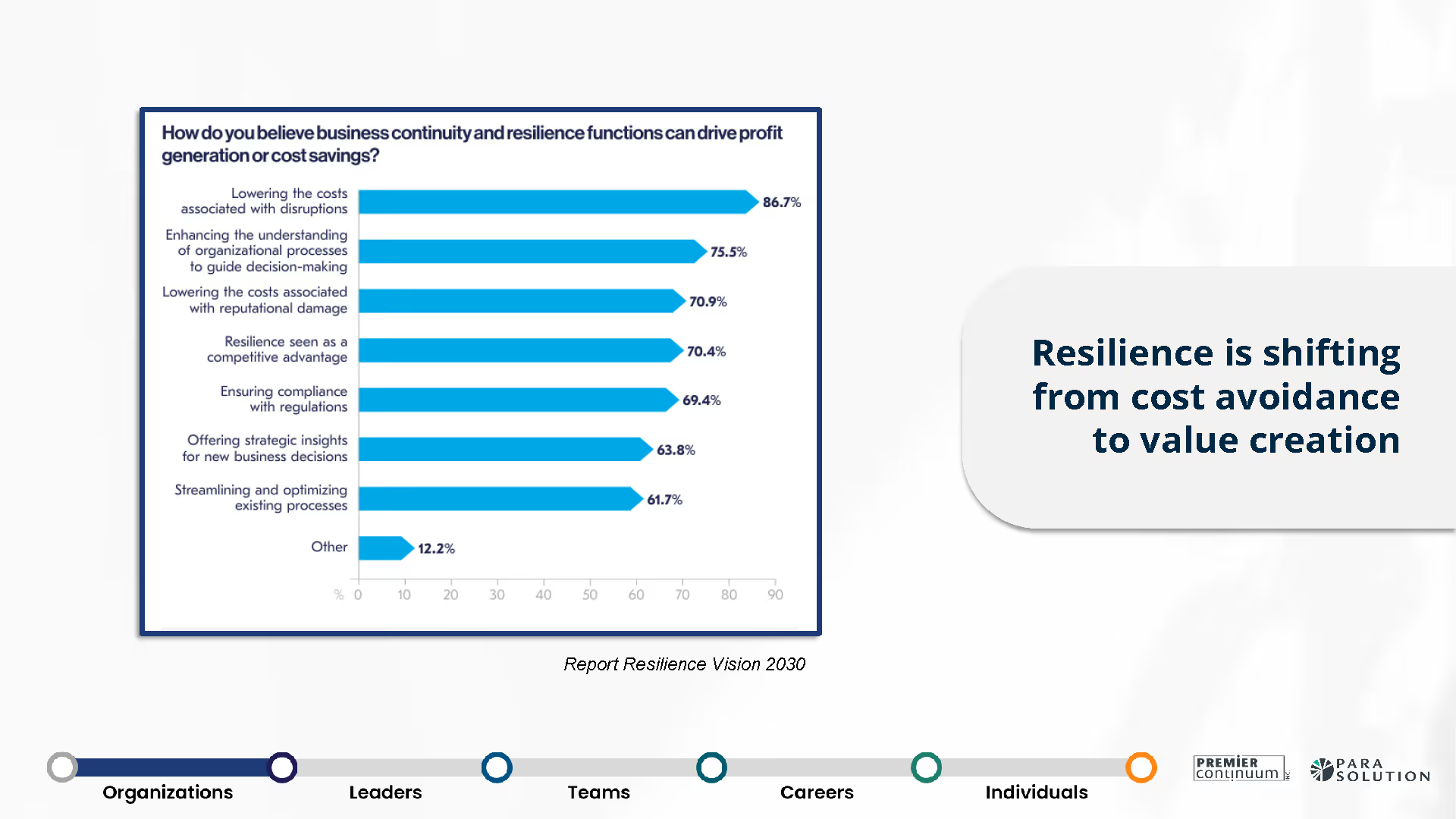
For a long time, resilience was viewed mainly as a necessary cost to reduce risk, ensure compliance, or manage crises. However, the data shows that this perception is changing.
Resilience creates business value.
Without this learning process, organizations risk repeating the same vulnerabilities during future disruptions. Learning ensures that resilience evolves over time.
70% of organizations now see resilience as a competitive advantage.
Viewing resilience as a set of capabilities provides a practical way to assess whether an organization is truly resilient.
Rather than focusing solely on documentation or compliance, organizations can examine whether they possess the capabilities to anticipate, prepare, respond, adapt, and learn.
As emphasized during the Premier Continuum Insights webinar, organizational resilience is only one layer within a broader resilience system that also includes leadership, teams, careers, and individuals.
Discover the CBCI 7.0 Certification Course, the BCI’s flagship course to learn the concepts and good practices for implementing a Business Continuity Management System (BCMS).